How Often Should Office Chairs Be Replaced?
The humble office chair is a piece of equipment we often take for granted. A place to hang our coat, a means of scooting across the office without having to get up, or a place to lean back when we are deep in thought. Over time we become accustomed to our chair, we know if someone has swapped it – or worse – if someone has adjusted it! All this activity is bound to take its toll, so how often should office chairs be replaced? Many people wait until their chair is on its last legs before ordering a replacement, or factoring it in when they’re doing an office revamp. At Office Furniture Online, we’re going to look at just when you should be replacing your office chairs.

Warranty vs Guarantee
Unfortunately, many people tend to avoid reading the small print when they make a purchase but it could give you vital information about the lifespan of your product. You may notice the words warranty or guarantee, but what do they mean and how do they affect the life of your chairs?
In essence, they are pretty similar, they both offer some form of cover against general wear and tear but the main difference lies in just how much cover they offer. Quite often a guarantee is free and described as a “manufacturers guarantee”, this translates to a promise from the manufacturer to replace or repair within the elected time but you quite often have to complete a form or some kind of registration document upon purchase in order to activate.
A warranty is similar in that it covers you against wear and tear within a specific time but a warranty can also be chargeable, think of it as an insurance policy, you pay either a one-off fee or a monthly fee in return for more detailed cover, however, it’s always worth investigating both to see exactly what they cover, as you don’t want to pay more if it isn’t going to cover what you need.
When it comes to buying a chair, the guarantee is a good indication of the quality as the more years it is guaranteed, the better the quality, however, this number can easily be exceeded with due care and regular maintenance.
Ergonomics for Longevity and Productivity
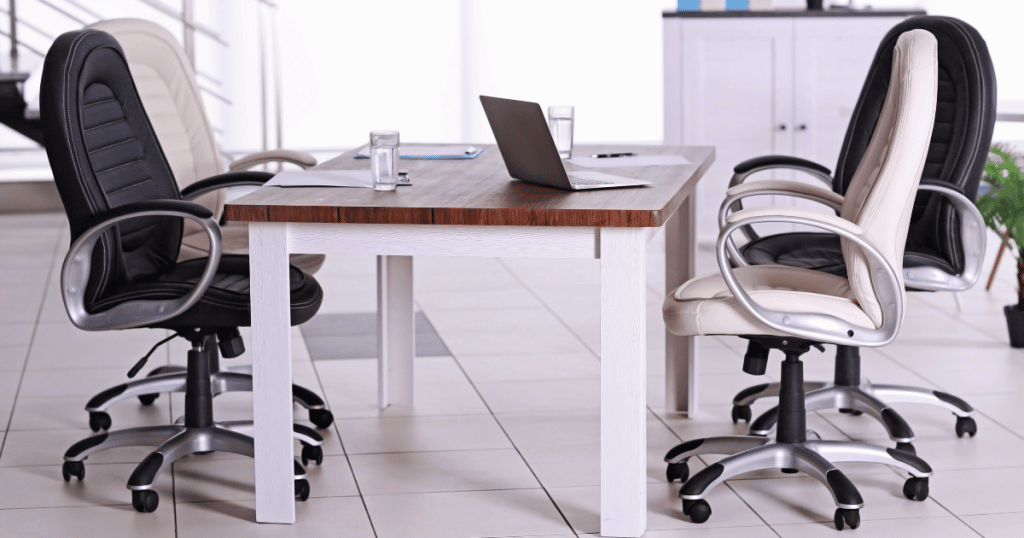
Ergonomics is an important factor when it comes to the life expectancy of an office chair. As you’d expect, the level of ergonomics can vary with each design, some may offer a simple height adjustment while others offer height adjustment, lumbar adjustment, adjustable headrest, contoured seat pads, adjustable armrests, waterfall seat front and more! Naturally, additional ergonomics come at an additional cost but it is 100% worth the investment. Not only will they last longer, but your staff will be more comfortable too, meaning better productivity. A cheaper price may be appealing to your pocket, but a cheaper chair means cheaper components which ultimately means you will likely have to replace them more often.
New vs Old
If you are looking to purchase new chairs then guarantees, ergonomics and price will give you a good indication of how long will last. If you are carrying out a risk assessment on existing chairs then you may want to look out for signs that your chair needs replacing, such as:
- It is not as comfortable as it used to be
- You can’t remember when you bought it
- The guarantee or warranty is massively outdated
- Your back aches after a day in the office
- You find yourself constantly having to adjust it
- It doesn’t feel as sturdy as it used to
- It looks worn
So while there are no hard and fast rules on how often you should replace your office chairs, we appreciate that everything has a lifespan, including office furniture, which is why it is important to use office chairs as intended, therefore it’s worth mentioning a few things that may reduce the lifespan, such as:
- Excessive use
- Exceeding the advised weight capacity for the design
- Hot desking
- Poor quality
- Cheaper products
If you’re thinking of replacing your office chairs, you’re in the right place. Our extensive range includes models to suit all workplaces and home offices, shop office chairs at Office Furniture Online today.
